“There is no scientific study more vital to man than the study of his own brain. Our entire view of the universe depends on it.” ― Francis Crick
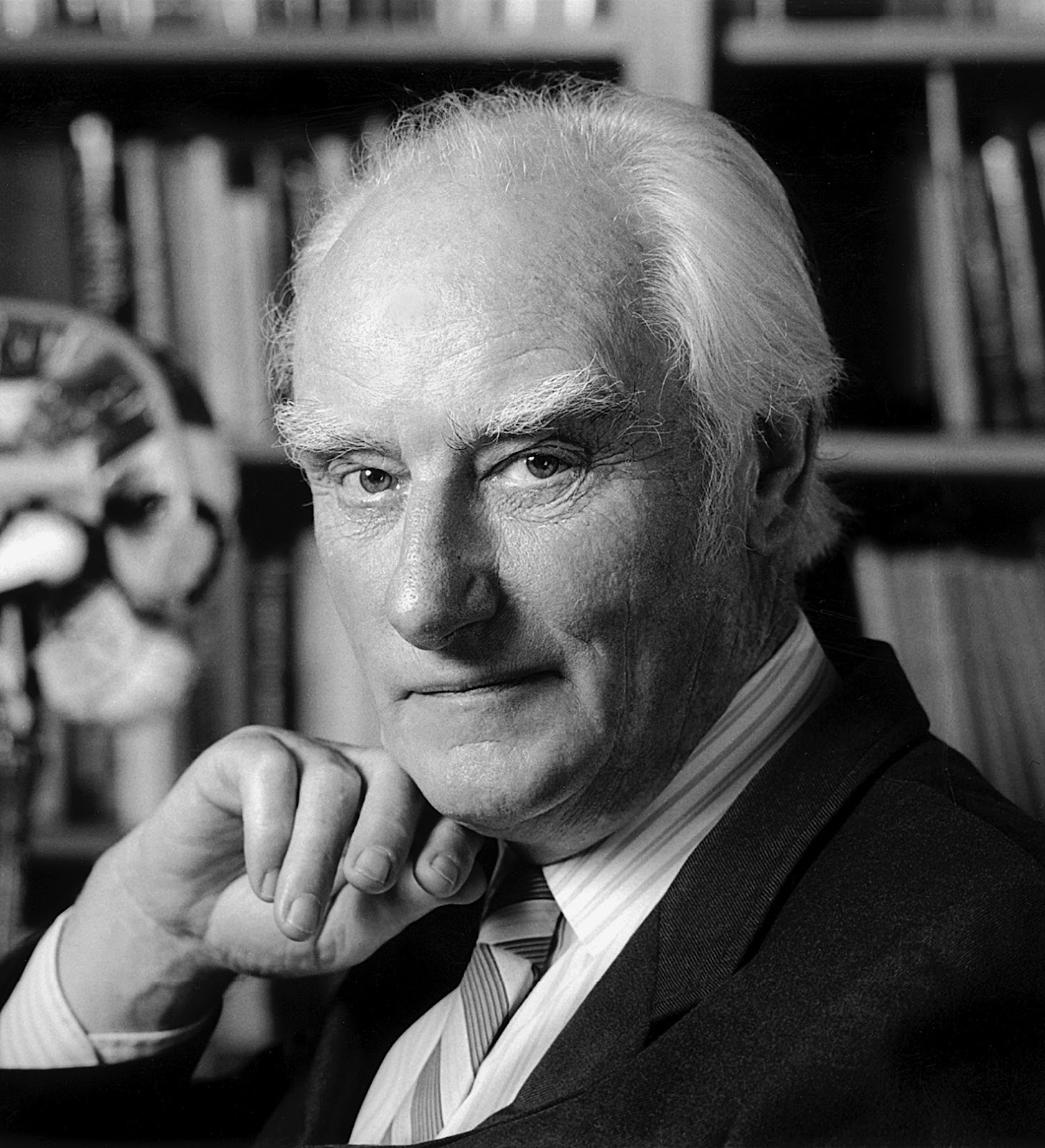
Vernon Benjamin Mountcastle discovered that the neocortex is uniform throughout. He determined that the brain, unlike any other part of the human body, is divided into little subunits, each with its own specific role.
Such discoveries made in neuroscience helps AI researchers conclude that pattern recognition is the key to Artificial General Intelligence. Today Deep Learning works on the principles of pattern recognition, and takes numerous inputs from many years of brain research.

After unraveling the mysteries of DNA, the secret to life, Francis Crick for the rest of his life turned his attention to solve the mysteries of brain and consciousness. He was certain that the answer to intelligence lies deep in the structure of brain. In his book, The Astonishing Hypothesis: The Scientific Search for the Soul, Francis Crick theorizes a framework for studying consciousness. His work turned out to be an inspiration for many AI researchers, as it became evident that deciphering brain might lead to creating general intelligence. Today the research from neuroscience is used by AI researchers to create intelligent algorithms, that are different than traditional symbolic based systems. We at Cere Labs try to draw inspiration from biology and other sciences to get insights in the research we conduct.
The discovery of Santiago Ramón y Cajal
The neuron is the structural and functional unit of the nervous system - Santiago Ramón y Cajal
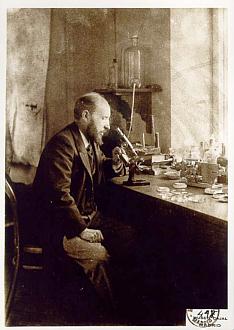
Ramon y Cajal in his laboratory.

The path breaking discovery of Santiago Ramon Cajal that the neocortex is made up of many layers and that the neuron is the structural and functional unit of nervous system helped AI researchers to take inspiration from this model. The drawings made by Santiago were precise and helped neuroscience to grow with an alarming rate. This is the reason he is called the father of modern neuroscience.
Neocortex is uniform
“The neocortex is uniform” - Vernon Benjamin Mountcastle
Vernon Benjamin Mountcastle discovered that the neocortex is uniform throughout. He determined that the brain, unlike any other part of the human body, is divided into little subunits, each with its own specific role.
This discovery led to the assumption that the neocortex uses the same mechanism for any kind of sensor including sensors for light, sound and touch. Take your brain and give it any sensor including sensors such as radar, the brain will eventually learn to understand data coming from the sensors.
Such discoveries made in neuroscience helps AI researchers conclude that pattern recognition is the key to Artificial General Intelligence. Today Deep Learning works on the principles of pattern recognition, and takes numerous inputs from many years of brain research.
In these instances, edge gadgets used for information communication have to be treated as a safe node and consequently have to be managed properly. Measures such as establishing account management for sorts of|several sorts of|various varieties of} user-level entry, and even information encryption features to protect delicate information, are additionally essential. With higher precision and digitally optimized initiatives, CNC milling machines can reduce waste within the building course of. In other words, CNC milling helps to create parts which are be} the right size and form for their supposed purpose. This means that there's much less waste material produced in Direct CNC the course of the building course of, which is sweet news for the environment.
ReplyDelete